
PG2 Projects
Representative Engagements
Work that required experienced judgment.
Oil & Gas
Oil and Gas Acquisition
Due Diligence
Client
Royal Dutch Shell (SWEPI)
Transaction Value
$4.7 billion
Geography
Pennsylvania and New York
Services
Environmental due diligence, risk evaluation, database management
Led environmental due diligence for Royal Dutch Shell’s (SWEPI) $4.7 billion acquisition of oil and gas assets across Pennsylvania and New York. Directed a multidisciplinary team in evaluating hundreds of oil wells, production facilities, pipelines, pits, and associated oil field infrastructure for environmental liabilities and operational risks.
Oversaw assessments of petroleum releases, remediation requirements, ecological concerns, waste management practices, and potential asbestos-containing materials. Managed the organization and integration of environmental data within a relational database system linked to a client-managed dashboard to support acquisition decision-making and risk evaluation.
Scale of Engagement
Hundreds of oil wells, production facilities, pipelines, pits, and associated infrastructure evaluated across two states. Environmental data integrated into a relational database linked to a client dashboard supporting real-time acquisition decision-making.
Superfund
Sediment & Superfund Programs
Site
Lower Ley Creek / Onondaga Lake Superfund Site
Location
Salina, New York
Contaminants
PCBs, industrial discharges, sediment systems
Services
Sediment investigation, PCB characterization, PRP coordination, RI/FS support

Directed sediment investigation, PCB characterization, and Superfund support activities for the Lower Ley Creek portion of the Onondaga Lake Superfund Site – one of the most complex sediment remediation programs in New York State.
Managed multi-media sampling and high-resolution sediment delineation for PCB contamination within Ley Creek, associated wetlands, floodplains, and historical dredge spoil areas impacted by decades of industrial discharges and flood-control dredging activities. Conducted PCB congener analysis, geostatistical evaluations including kriging, and environmental database management to support remedial decision-making, contaminant mapping, and risk evaluation.
Supported a large Potentially Responsible Party (PRP) group by coordinating technical activities, assisting with allocation and liability issues, and integrating complex environmental datasets into defensible remedial and cost-allocation strategies. Work included evaluation of PCB transport, sediment stability, wetland impacts, floodplain contamination, and long-term remediation considerations associated with the Onondaga Lake watershed restoration program.
Program Complexity
Multi-party PRP coordination across one of New York State’s most significant sediment remediation programs. Geostatistical analysis, congener-level PCB characterization, and environmental database integration used to support both regulatory strategy and allocation-related evaluations.
Oil & Gas
Infrastructure Decommissioning
Clients
Quaker State Petroleum / Shell
Scale
596+ wells plugged, 2,100+ miles of pipeline decommissioned
Geography
Pennsylvania, New York, West Virginia
Services
Well plugging, pipeline decommissioning, risk modeling, regulatory coordination

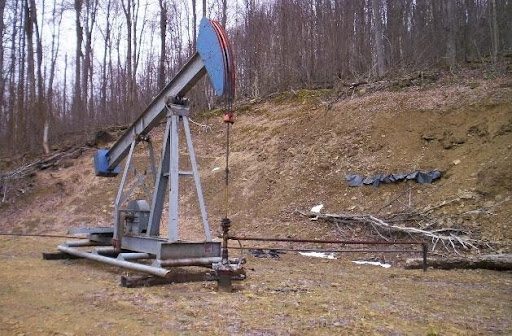
Directed large-scale well plugging, infrastructure decommissioning, and environmental risk management programs for major oil and gas clients across Pennsylvania, New York, and West Virginia. Managed all phases of conventional oil and gas well plugging operations including permitting, regulatory coordination, engineering design, contractor procurement and oversight, landowner relations, and field implementation for active and legacy oil field assets.
Led the successful plugging and abandonment of more than 596 oil wells for Quaker State Petroleum / Shell lubricants operations as part of a multi-state remediation and decommissioning initiative. Concurrently directed the closure, spill response, and “tap-and-drain” decommissioning program for more than 2,100 miles of legacy oil pipelines across Pennsylvania and West Virginia.
For Shell (SWEPI) in Taylorstown, Pennsylvania, directed a multidisciplinary team performing a comprehensive risk analysis associated with well field decommissioning operations. Developed and implemented TECOP risk models and Opportunity/Risk Register evaluations to quantify schedule, cost, operational, and regulatory uncertainties.
Program Scale
596+ wells plugged and 2,100+ miles of legacy pipeline decommissioned across three states. TECOP risk modeling and quantitative risk assessment used to evaluate low-probability/high-impact events and support executive-level decision-making on schedule, cost, and operational strategy.
Litigation Support
Environmental Litigation Support
Case Types
Petroleum releases, chlorinated solvents, MGPs, product liability, insurance allocation
Services
Expert technical review, environmental forensics, GIS, fate and transport, expert opinions
Clients
External legal counsel, insurance teams, industrial clients

Provided strategic, technical, and litigation support to external legal counsel for complex environmental, product liability, insurance, and intellectual property cases involving petroleum releases, chlorinated solvents, manufactured gas plants (MGPs), and energy-related technologies.
Services included expert technical review, environmental forensic analysis, GIS mapping, historical research, fate and transport evaluations, regulatory analysis, expert opinion development, and litigation strategy support. Additionally provided strategic and technical consulting for environmental litigation matters involving petroleum contamination, chlorinated solvent releases, insurance allocation disputes, and property transfer issues.
Work included preparation of expert opinion letters, environmental forensic evaluations, contaminant fate and transport analysis, historical release reconstruction, and determination of release timing and source attribution for high-value insurance and liability disputes.
Scope of Support
Litigation support engagements spanning petroleum releases, chlorinated solvents, MGPs, insurance allocation, and property liability matters. Expert opinions developed to withstand regulatory and legal scrutiny across complex, high-value cases.
Remediation
Industrial Site Remediation
Sites
Allied Paper/Kalamazoo River Superfund Site, MI; Chlorinated solvent sites, NY
Contaminants
PCBs, chlorinated solvents, MGP constituents, petroleum
Programs
CERCLA RI/FS, hydrogeologic investigation, remedial alternatives analysis
Services
Technical leadership, RI/FS management, regulatory strategy, litigation support
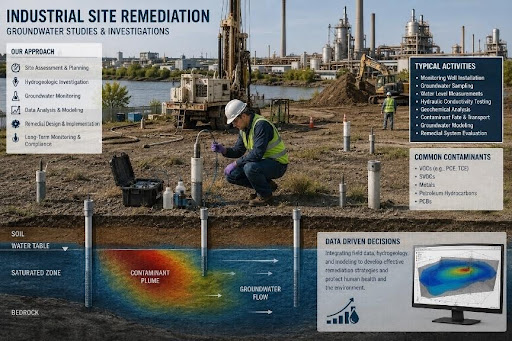
Directed and supported complex industrial remediation, hydrogeologic investigation, and CERCLA/Superfund Remedial Investigation/Feasibility Study (RI/FS) programs involving contaminated river systems, PCB-impacted sediments, former manufactured gas plant (MGP) sites, chlorinated solvent releases, and large multi-operable unit industrial facilities across the United States.
Representative projects included RI/FS activities for the Allied Paper, Inc./Portage Creek/Kalamazoo River Superfund Site in Kalamazoo, Michigan – one of the nation’s significant PCB sediment remediation programs involving contaminated river systems and multiple operable units. Work included technical leadership for sediment, groundwater, air, and ecological investigations; evaluation of PCB transport and floodplain impacts; development of remedial alternatives; and review of engineering controls and long-term remediation strategies.
Additionally provided technical review, hydrogeologic assessment, and strategic support for complex groundwater contamination and regulatory enforcement matters involving chlorinated solvents at industrial manufacturing facilities in New York. Conducted independent evaluations of agency-prepared RI/FS documentation, identified deficiencies in hydrogeologic and contaminant transport analyses, and prepared technical assessments related to groundwater flow, plume migration, and environmental liability.
Technical Scope
Multi-media investigations across soil, sediment, groundwater, surface water, air, and ecological systems. Independent RI/FS review used to identify agency deficiencies and support negotiation and litigation strategy for industrial clients facing significant regulatory exposure.